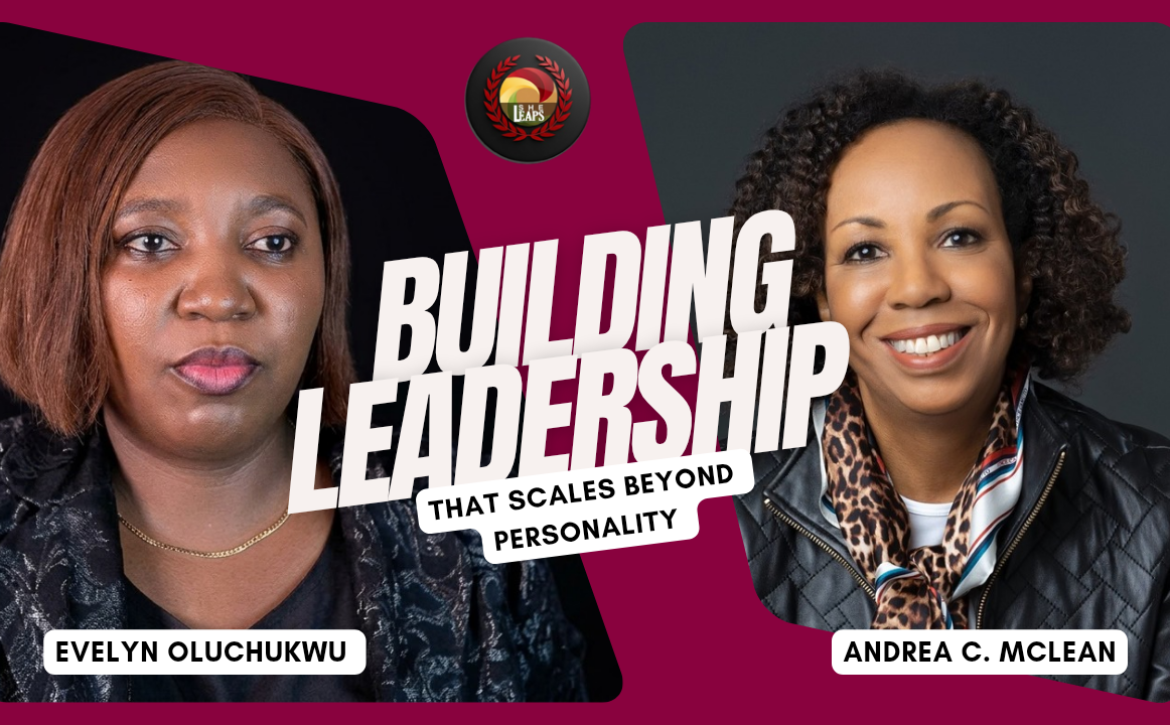
Beyond Personality: Building Leadership Systems That Scale
In corporate environments, many high-performing professionals operate under the belief that delivering exceptional work will naturally translate into executive recognition and career advancement. However, relying solely on individual execution often traps capable leaders in operational roles, limiting their strategic visibility and long-term influence. In a featured conversation on the UPSURGE! podcast with host Evelyn, leadership strategist, executive coach, and author Andrea McLean shares actionable strategies for breaking out of the execution trap and stepping into strategic authority.
With over 35 years of corporate experience leading global operations, technology transformations, and women’s development initiatives, McLean has witnessed firsthand how organizations struggle when leadership relies on personality rather than scalable systems. To build lasting influence that survives organizational change, female professionals must shift from being dependable contributors to strategic decision-makers who cultivate distributed leadership across their teams.
Content
1. Escaping the Operational Execution Trap
High-performing professionals frequently find themselves caught in a common professional dilemma: because they are exceptionally reliable at getting tasks done, senior leaders are often hesitant to promote them. When a contributor handles operational execution seamlessly without establishing delegation systems, moving them creates an operational gap that managers fear filling.
To overcome this hurdle, professionals must actively communicate their career aspirations, seek executive sponsorship, and build delegation frameworks that empower others to step into operational roles. Shifting out of an execution box requires demonstrating an understanding of broader organizational impacts, such as downstream effects and multi-year strategic outcomes, rather than focusing exclusively on daily tasks.
2. Reframing Executive Perception with Strategic Language
Perception plays a decisive role in how executive potential is evaluated. When professionals receive feedback that they are “not strategic,” McLean advises intentionally incorporating strategic vocabulary into workplace discussions.
She highlights the example of a senior executive who systematically reframed her contributions during meetings by using phrases like “here is a strategy recommendation” or “here is a strategic suggestion”. Over time, this consistent linguistic positioning altered how peers and senior leadership perceived her value, transforming her reputation into that of a key strategic voice within the organization.
3. Implementing Distributed Leadership Across the Enterprise
Modern organizations are increasingly moving away from traditional top-down hierarchies in favor of distributed leadership. Rather than concentrating decision-making at the top, distributed leadership grants team members clear decision rights, allowing authority to exist “from every chair”.
McLean distinguishes distributed leadership from standard delegation:
- Delegation: Assigning a task and requiring the team member to report back for approval at every stage.
- Distributed Leadership: Defining decision boundaries, empowering team members to make autonomous calls, and reviewing high-level progress and organizational impact together.
Successfully establishing distributed leadership requires both a top-down corporate culture that rewards shared authority and individual managers who are willing to relinquish strict control. In politically fluid or complex environments, emerging leaders can build influence by developing deep subject-matter expertise and presenting business cases that demonstrate mutual value across functional departments.
4. Navigating Change and Building Organizational Trust
During periods of restructuring, downsizing, or digital transformation, organizational systems often fail not because of technological flaws, but because of a lack of adoption. McLean emphasizes that adoption depends fundamentally on trust and empathetic communication.
Leaders must communicate transparently with their teams—sharing the rationale behind decisions, outlining what is known and unknown, and maintaining open dialogue. When consistent communication and trust work in tandem, teams are far more resilient and willing to navigate complex transitions.
5. The S.O.A.R. Framework for Career Transformation
To guide professionals through career transitions, McLean developed the proprietary S.O.A.R. coaching framework:
- S — Shift Your Mindset: Cultivate internal belief, overcome self-doubt, and recognize your capability to step into strategic roles.
- O — Overcome Challenges: Identify specific obstacles—whether skill gaps, mentorship needs, or structural hurdles—and devise targeted solutions.
- A — Activate a Plan: Break down overarching goals into manageable, incremental steps to build momentum.
- R — Reflect & Refine: Periodically assess progress, evaluate achievements, and adjust strategies for continuous growth.
Summary
True executive influence is structural rather than merely positional. By stepping away from personality-driven management and establishing distributed leadership systems, professionals build organizations that remain resilient through transition. As Andrea McLean outlines in her book, Decide to Be Your Future Self, career advancement begins with a conscious choice: stop waiting for external permission, own your agency, and actively step into the leadership role you aspire to fil